Showing posts with label policy. Show all posts

Thursday, August 15, 2013

Dr. Jill Biden Announces Sarah Baker as Policy Director

Dr. Jill Biden Announces Sarah Baker as Policy Director | The White House Skip to main content | Skip to footer site map The White House. President Barack Obama The White House Emblem Get Email UpdatesContact Us Go to homepage. The White House Blog Photos & Videos Photo Galleries Video Performances Live Streams Podcasts 2012: A Year in Photos

A unique view of 2012

2012: A Year in Photos

Briefing Room Your Weekly Address Speeches & Remarks Press Briefings Statements & Releases White House Schedule Presidential Actions Executive Orders Presidential Memoranda Proclamations Legislation Pending Legislation Signed Legislation Vetoed Legislation Nominations & Appointments Disclosures Visitor Access Records Financial Disclosures 2012 Annual Report to Congress 2011 Annual Report to Congress 2010 Annual Report to Congress on White House Staff A Commitment to Transparency

Browse White House visitor logs

President Obama greets White House visitors

Issues Civil Rights It Gets Better Defense End of Iraq War Disabilities Economy Jobs Reform and Fiscal Responsibility Strengthening the Middle Class Support for Business Education Energy & Environment Ethics Foreign Policy Health Care Homeland Security Immigration Refinancing Rural Service Seniors & Social Security Snapshots Creating Jobs Health Care Small Business PreK-12 Education Taxes Tax Receipt The Buffett Rule Technology Urban Policy Veterans Joining Forces Violence Prevention Women Immigration Reform

Creating an Immigration System for the 21st Century

Immigration Reform

2012 Federal Taxpayer Receipt

Understand how and where your tax dollars are being spent

Taxpayer Receipt

The Administration We the People

Create and Sign Petitions Now

We the People

President Barack Obama Vice President Joe Biden Being Biden Audio Series First Lady Michelle Obama Dr. Jill Biden The Cabinet White House Staff Chief of Staff Denis McDonough Deputy Chief of Staff Rob Nabors Deputy Chief of Staff Alyssa Mastromonaco Counselor to the President Peter Rouse Senior Advisor Valerie Jarrett Executive Office of the President Other Advisory Boards About the White House White House On the Go

Download our mobile apps

Download our mobile appsTake A Virtual Tour

View the Residence, East Wing and West Wing

Interactive Tour Inside the White House Interactive Tour West Wing Tour Video Series Décor and Art Holidays Presidents First Ladies The Oval Office The Vice President's Residence & Office Eisenhower Executive Office Building Camp David Air Force One White House Fellows President’s Commission About the Fellowship Current Class Staff Bios News and Newsletters White House Internships About Program Presidential Department Descriptions Selection Process Internship Timeline & FAQs Tours & Events 2013 Easter Egg Roll Kitchen Garden Tours Take a Virtual Tour of the White House Mobile Apps Our Government The Executive Branch The Legislative Branch The Judicial Branch The Constitution Federal Agencies & Commissions Elections & Voting State & Local Government Resources /* Maximize height of menu features. */if(typeof(jQuery)!='undefined')jQuery.each($('#topnav'),function(i,v){var o=$(v),oh=o.height(),sh=o.siblings().height();if(oh Home • Briefing Room • Speeches & Remarks   The White House

Office of the Vice President

For Immediate Release May 16, 2013 Dr. Jill Biden Announces Sarah Baker as Policy Director

Washington, D.C.—The Office of the Vice President today announced that Sarah Baker, who most recently served as Deputy Associate Counsel in the Office of Presidential Personnel, will serve as Dr. Jill Biden’s new Policy Director.  Sarah replaces Kirsten White, who was policy director for the first term and recently returned to practicing law. 

Prior to joining the Administration, Sarah worked at Hogan Lovells US LLP, most recently serving as the United States Senior Associate for the firm’s pro bono department and formerly as a member of the White-Collar Criminal Defense and Government Investigations group. While at Hogan Lovells, she worked on a variety of issues including healthcare fraud, civil rights, housing discrimination, hate speech, and immigration.

She earned her undergraduate degree from Rutgers College and received her J.D. from the University of Virginia School of Law.

Extending Middle Class Tax Cuts

Blog posts on this issue May 17, 2013 6:08 PM EDTWeekly Wrap Up: “What Our Families Deserve”

Here’s a quick glimpse at what happened this week on WhiteHouse.gov.

May 17, 2013 5:50 PM EDTA Stronger and Sustainable Military for the 21st Century

The President and the Department of Defense are taking unprecedented steps to protect our environment, achieve significant cost savings, and give our military better energy options.

May 17, 2013 5:28 PM EDTComing Together to Stop Slavery

Today at the White House, we convened the 10th annual meeting of the President’s Interagency Task Force to Monitor and Combat Trafficking in Persons.

view all related blog posts ul.related-content li.views-row img {float: left; padding: 5px 10px 0 0;}ul.related-content li.view-all {padding-bottom: 3em;} Stay ConnectedFacebookTwitterFlickrGoogle+YouTubeVimeoiTunesLinkedIn   Home The White House Blog Photos & Videos Photo Galleries Video Performances Live Streams Podcasts Briefing Room Your Weekly Address Speeches & Remarks Press Briefings Statements & Releases White House Schedule Presidential Actions Legislation Nominations & Appointments Disclosures Issues Civil Rights Defense Disabilities Economy Education Energy & Environment Ethics Foreign Policy Health Care Homeland Security Immigration Refinancing Rural Service Seniors & Social Security Snapshots Taxes Technology Urban Policy Veterans Violence Prevention Women The Administration President Barack Obama Vice President Joe Biden First Lady Michelle Obama Dr. Jill Biden The Cabinet White House Staff Executive Office of the President Other Advisory Boards About the White House Inside the White House Presidents First Ladies The Oval Office The Vice President's Residence & Office Eisenhower Executive Office Building Camp David Air Force One White House Fellows White House Internships Tours & Events Mobile Apps Our Government The Executive Branch The Legislative Branch The Judicial Branch The Constitution Federal Agencies & Commissions Elections & Voting State & Local Government Resources The White House Emblem En español Accessibility Copyright Information Privacy Policy Contact USA.gov Developers Apply for a Job

View the original article here

Sunday, August 11, 2013

Remarks by Tom Donilon, National Security Advisor to the President At the Launch of Columbia University’s Center on Global Energy Policy

The White House

Office of the Press Secretary

Introduction

Thank you, Jason.  During your time at the White House, the President and our team counted on your deep knowledge of energy, climate and national security.   Thank you also to Columbia University.  You chose well in Jason and there could scarcely be a more timely moment for a Center like this one.   Finally, a special thanks to Dan Yergin, who has made an unparalleled contribution to how we understand and talk about energy.  Dan, I look forward to our discussion today.  But, I want to tell you that I think I should be interviewing you.  Congratulations also on hiring David Sandalow, who has been an important part of our team at the Department of Energy for the past four years, as your inaugural fellow. 

It is a bit unusual for a National Security Advisor to address an energy conference like this one.   So let me begin with a straightforward proposition:  energy matters profoundly to U.S. national security and foreign policy.   It matters because the availability of reliable, affordable energy is essential to our economic strength at home, which is the foundation for our leadership in the world.  It matters because scarce resources have driven both commerce and conflict since time immemorial—and still do today.   It matters because energy supplies present strategic leverage and disposable income for countries that have them.  It matters because the challenge of accessing affordable energy is one shared by people and businesses in every country in the world—in young democracies, emerging powers and developing economies; in allies and adversaries alike.  It matters because disruptions in supply anywhere can have economic impacts that are global. 

Energy shapes national interests and relations between nations.  It shapes politics, development and governance within nations.   And it shapes the security and stability of the climate and environment.   For all these reasons and many others, increasing global access to secure, affordable and ever cleaner supplies of energy is a global public good and a national interest of the United States.

Finally, at this moment in history, energy matters to those of us entrusted with U.S. national security because the United States is reaching an inflection point in the story that Dan Yergin has so expertly told.  We are in the midst of two changes that have presented themselves with great speed:  first, the substantial increase in the supply of available, affordable energy inside the United States – which is having important impacts on U.S. economic growth, energy security and geopolitics.  Second, a transformation in the global climate, driven by the world’s use of energy, that is presenting not just a transcendent challenge for the world but a present-day national security threat to the United States.  Both push us toward the same longer-term endpoint: the comprehensive transformation of the world’s energy economy toward cleaner, more sustainable energy solutions.
Today, I want to talk first about the changes underway and why they matter for U.S. national security.  Then, I want to explain how we intend to work, domestically and internationally, to seize the opportunities this moment presents and meet its challenges head on.

What We Are Seeing:  A Transformational Moment

Let me begin with a brief discussion of the changing context.   The current optimism about the U.S. and global energy picture is a relatively new development.  

In the 1940s, 50s and 60s, America was largely self-sufficient in oil production.  But in 1970, U.S. oil production peaked at over eleven million barrels per day, unable to keep up with growing U.S. demand.  In his Pulitzer-winning book, The Prize, Dan Yergin tells the story of the day in 1972 when the Texas Railroad Commission ended its decades-long practice of rationing oil supplies.  There was no more surplus oil left to ration.  The United States needed to consume it all.  This was a negative turning point whose implications for U.S. power in the world became painfully clear during the Arab oil embargo the following year.  Suddenly, the United States thought of itself as an energy poor nation, dependent on oil and subject to events beyond our shores.  That mindset held for nearly forty years. 

When President Obama took office, the energy picture looked decidedly different than it does today.  Indeed, forecasters said that the U.S. would need to double its imports of liquefied natural gas (LNG) over the next five years.  There was renewed talk of “peak oil.”  Nearly every prediction about our energy future made five years ago has been turned on its head.  U.S. innovation and technology are allowing us to tap unconventional energy resources.  Total U.S. oil consumption peaked in 2005 and has been declining since—a trend the President’s energy efficiency initiatives, including new fuel efficiency standards and investment in new energy sources, will only deepen.   

To understand just how significantly and quickly the landscape has shifted, consider a few statistics: 

Domestic oil and natural gas production has increased every year President Obama has been in office. We now produce seven million barrels of oil per day, the highest level in over two decades. The International Energy Agency has projected that the United States could be the world’s largest oil producer by the end of the decade. Of course, we recognize that these are early days and prediction is a risky business.In 2005, sixty percent of U.S. oil was imported.  Today the number is forty percent and falling—a dramatic move towards fulfilling the President’s goal of cutting our oil imports in half by 2020. Today the United States is the top natural gas producer in the world. Our natural gas production has grown by one-third since 2005, driven by the increase in shale gas, which now accounts for forty percent of our natural gas output.  The domestic price of natural gas has dropped from over $13 per million Btu in 2008 to around $4 today.   Natural gas imports are down almost sixty percent since 2005, and we are exporting more natural gas by pipeline to Mexico and Canada. U.S. energy-related greenhouse gas emissions have fallen to 1994 levels due in large part to our success over the past four years in doubling electricity from renewables, switching from coal to natural gas in power generation, and improving energy efficiency.

New opportunities are also emerging globally.  The Western Hemisphere is poised to be a major energy supplier in the decades ahead.  The Americas have been responsible for half of the growth in incremental oil supply over the past five years, and BP predicts that the Americas will account for almost two-thirds of the growth in global oil supply between now and 2035.  That also means more supplies from relatively more stable nations with greater commitment to the rule of law and open markets.   When the President travels in early May to Mexico and Central America, energy will be among the issues discussed.  

The nature of global energy demand is also shifting to reflect the changes in global economic growth.  Demand across Asia, the Middle East and Latin America is surging.  This year may well mark the first time in history that oil demand from developing economies surpasses that of developed nations. Last December, Chinese net oil imports exceeded those of the United States for the first time.  China alone has accounted for half the growth in global oil demand since 2000 and became the world’s largest energy consumer by 2009.  Coal met about forty percent of developing economies’ energy demand, but over seventy percent of China’s energy needs in 2011.

We are just beginning to understand and appreciate the geostrategic impacts of these changes to the U.S. and global energy landscape, but let me set out a few that I see:

First, the new U.S. energy posture and outlook will directly strengthen the nation’s economy.  There are not a lot of iron laws of history.  But one is that, as the President has said, a country’s political and military primacy depends on its economic vitality. Our strength at home is critical to our strength in the world, and our energy boom has proven to be an important driver for our economic recovery—boosting jobs, economic activity, and government revenues.  Take the example of North Dakota, where unemployment has dropped to near 3 percent, the lowest in the country, and the state has a $3.8 billion budget surplus, largely due to increased unconventional gas and oil production in the state.   IHS CERA estimates that shale gas supported direct and indirect employment for 600,000 Americans in 2010, a number that could double by 2020. 

America’s natural gas boom is helping to spark a domestic manufacturing revival.  Manufacturers in energy-intensive sectors have announced up to $95 billion investments across the U.S. to take advantage of low-cost natural gas.   The largest investments announced have been in the chemicals sector which uses natural gas as a feedstock, but there have also been major announcements in other industries like steel, plastics, and glass.  For the first time in over sixty years, the United States is exporting more refined petroleum than it is importing.   The reduction in energy imports has a positive impact on our trade balance, helps lower domestic and global energy prices, and allows a greater share of the money Americans spend on energy to remain within the U.S. economy. 

Furthermore, as a result of the Administration’s historic investments in clean energy, tens of thousands of Americans have jobs and America is now home to some of the largest wind and solar farms in the world.

Domestic economic developments like these improve U.S. standing and send a powerful message that the United States has the resources, as well as the resolve, to remain the world’s preeminent power for years to come. 

Second, America’s new energy posture allows us to engage from a position of greater strength.  Increasing U.S. energy supplies act as a cushion that helps reduce our vulnerability to global supply disruptions and price shocks. It also affords us a stronger hand in pursuing and implementing our international security goals.

For example, the United States is engaged in a dual-track strategy that marshals pressure on Iran in pursuit of constructive engagement to address the world’s concerns about Iran’s nuclear program.  As part of the pressure track, the United States engaged in tireless diplomacy to persuade consuming nations to end or significantly reduce their consumption of Iranian oil while emphasizing to suppliers the importance of keeping the world oil market stable and well supplied.   The substantial increase in oil production in the United States and elsewhere meant that international sanctions and U.S. and allied efforts could remove over 1 million barrels per day of Iranian oil while minimizing the burdens on the rest of the world.   And the same dynamic was at work in Libya in 2011 and in Syria today.

Third, the development of a more global natural gas market benefits the U.S. and our allies.  We have a strong interest in a world natural gas market that is well supplied, diverse, and efficiently priced.  Increased U.S. and global natural gas production can enhance diversity of supply, help delink gas prices from expensive oil indexed contracts, weaken control by traditional dominant natural gas suppliers, and encourage fuel switching from oil and coal to natural gas. 

A decade ago, market analysts forecast that the U.S. would need to import large volumes of natural gas by pipeline and LNG. Since then, domestic production has reached historic highs and domestic natural gas reserves have almost doubled. Gas supplies originally destined for the United States are being redirected to other countries.   

Many of our allies have expressed interest in the potential of the United States as a global natural gas supplier. The Department of Energy is currently reviewing at least seventeen applications to export U.S. LNG to non-Free Trade Agreement countries. It will conduct a comprehensive review of all relevant factors to determine whether each non-FTA LNG export project is deemed to be consistent with the public interest.

Global demand for natural gas is projected to rise by one-fifth over the coming decade. Burning natural gas is about one-half as carbon-intensive as coal—which makes it a critical “bridge fuel” as the world transitions to even cleaner sources of energy.

Fourth, reduced energy imports do not mean the United States can or should disengage from the Middle East or the world.   Global energy markets are part of a deeply interdependent world economy.  The United States continues to have an enduring interest in stable supplies of energy and the free flow of commerce everywhere.   

We have a set of enduring national security interests in the Middle East, including our unshakeable commitment to Israel’s security; our global nonproliferation objectives, including our commitment to prevent Iran from acquiring a nuclear weapon; our ongoing national interest in fighting terrorism that threatens our personnel, interests and our homeland; our strong national interest in pursuit of Middle East peace; our historic stabilizing role in protecting regional allies and  partners and deterring aggression; and our interest in ensuring the democratic transitions in Yemen, North Africa and ultimately in Syria succeed. 

Which brings me to my fifth point: though it is typically discussed in terms of its energy, environmental or economic implications, the changes to our climate that we are seeing are also a national security challenge.  

The national security impacts of climate change stem from the increasingly severe environmental impacts it is having on countries and people around the world. Last year, the lower 48 U.S. states endured the warmest year on record.   At one point, two-thirds of the contiguous United States was in a state of drought, and almost 10 million acres of the West were charred from wildfires. And while no single weather event can be directly attributed to climate change, we know that climate change is fueling more frequent extreme weather events. Last year alone, we endured 11 weather-related disasters that inflicted a $1 billion or more in damages – including Hurricane Sandy. 

Internationally, we have seen the same: the first twelve years of this century are all among the fourteen warmest years on record.  Last year, Brazil experienced its worst drought in five decades; floods in Pakistan affected over five million people and damaged or destroyed over 460,000 homes; severe flooding across western Africa and the Sahel impacted three million people across fifteen countries--to give just a few examples among many. 

The fact that the environmental impacts of climate change present a national security challenge has been clear to this Administration from the outset. The President’s National Security Strategy recognizes in no uncertain terms that “the danger from climate change is real, urgent, and severe.  The change wrought by a warming planet will lead to new conflicts over refugees and resources; new suffering from drought and famine; catastrophic natural disasters; and the degradation of land across the globe.”

The Department of Defense’s 2010 Quadrennial Defense Review, issued by Secretary Robert Gates, warned not only that climate change “may act as an accelerant of instability or conflict, placing a burden to respond on civilian institutions and militaries around the world” but also of the potential impacts of climate change on our operating environment, and on our military installations at home and around the world. A National Intelligence Assessment in 2008, multiple Worldwide Threat Assessments produced by the Director of National Intelligence, and numerous expert analyses have reached similar conclusions.  This underscores the need – for the sake of our national security -- to reduce the greenhouse gas emissions that drive climate change and to ensure that we are as prepared as possible for the impacts of climate change.

U.S. Policy

These are a few of the changes we are seeing and what they mean for U.S. national security.  Let me now turn to what we are doing about it. 

First and foremost, the United States is leading at home, which is where our energy and climate policy begins.  The United States is pursuing an “all of the above approach” to develop new sources of energy, expand oil and gas production, boost renewable power generation, support growth in nuclear power and increase energy efficiency, while also working to reduce reliance on imported oil. 

I do not believe that the dramatic and fast-paced energy changes we have seen in the United States in recent years were as likely to have begun elsewhere first.  It is not just that the U.S. has a substantial unconventional resource base.  Many other countries have promising shale deposits.  The reason that development has succeeded in the U.S. is because we have the right balance of an open investment climate, innovative entrepreneurial spirit, environmental safeguards, infrastructure and skilled service companies.  The U.S. shale experience demonstrates the powerful results that a complex resource base, combined with open markets, wise early government investments in key technologies, a vibrant private sector, access to capital, a predictable investment climate, and responsible regulatory structure can deliver.

Under President Obama, the United States has also made unprecedented investments in clean energy, research and development, and renewable fuels.  The President put in place historic new fuel standards for cars and light-duty trucks that will nearly double the efficiency of our fleet; doubled the amount of power produced by wind, solar, and geothermal; and boosted the efficiency of buildings and our industrial sector.   He has also called for the creation of an Energy Security Trust that will support new research and development of cost-effective advanced transportation technologies, and he is leading domestic and international efforts to support the safe use of nuclear power.
It is important to note that America has achieved a significant reduction in our greenhouse gas emissions.  Last year energy-related U.S. emissions fell to their lowest levels since 1994—a remarkable twelve percent below where we stood in 2005.  Even as our economy recovers, we are determined to keep moving toward our target for 2020: to bring greenhouse gas emissions approximately seventeen percent below 2005 levels.

In that spirit, the President will not hesitate to use existing tools and authorities to further reduce greenhouse gas emissions, increase the preparedness and resiliency of our communities to climate change, and accelerate clean energy deployment. 

Second, we are working to manage potential causes of energy-related conflict.

For example, the promise of offshore energy resources is contributing to tensions in the South and East China Seas that will test East Asia’s political and security architecture.  While the United States has no territorial claims there, and does not take a position on the claims of others, the United States firmly opposes coercion or the use of force to advance territorial claims.  We have consistently made clear our position that only peaceful, collaborative and diplomatic efforts, consistent with international law, can bring about lasting solutions that will serve the interests of all claimants and all countries in this vital region. 

The Arctic is another place where the potential for new supplies of energy and new shipping routes could lead to rising tensions.  So far, that has not been the case and the United States looks forward to meeting with our partners in the eight-country Arctic Council next month, which we value as a forum for open and collaborative dialogue among littoral states on a range of Arctic issues.  The United States will promote productive dialogue to address international disputes in the region as they arise on issues from transportation to resource claims.  As ice caps melt, shipping routes open and energy supplies are made more accessible, the United States will work to ensure open access and transit, rules-based resolution of territorial disputes and adherence to the highest environmental standards.

To put ourselves on the strongest possible footing to prevent energy-related conflict, the United States must take the long overdue step of ratifying the Law of the Sea Treaty.  Every businessperson I speak with, every military leader, the Joint Chiefs of Staff and many, many others all come to the same conclusion:  ratifying the treaty will only strengthen America’s hand economically, diplomatically, and in terms of our security. 

Another example is Iraq.  After the U.S. has invested significant blood and treasure, we have a strong interest in seeing a peaceful and prosperous country emerge.  Key to that will be the successful development of Iraq’s energy resources.  This is a good example of where energy diplomacy matters.  Iraq’s energy sector has the potential to deepen internal and regional divisions, but it can also help unify the country.  And so we are working to help Iraq expand its oil production, build out its export infrastructure, and diversify its energy transportation routes.

Over the past two years, Iraq’s crude oil production has grown 25 percent to three million barrels per day, surpassing Iranian output and reaching levels not seen in over two decades.  We envision Iraq fulfilling its tremendous oil supply potential, with multiple existing and potential export routes, including from Basra to Ceyhan.  Getting there will require active diplomatic engagement and an agreement among Iraqis to share export revenues equitably, as set forth in their constitution, so that all Iraqi citizens benefit from their natural resources.  It is a long-term vision, but one that is essential for Iraqi stability, our own national security, and the future stability of global energy markets. And the United States will support this vision as a central priority in our partnership with Iraq.

Third, we are building on the unique diplomatic, regulatory and technical capacity of the United States to help other nations increase energy supply, build capacity and strengthen the institutions that enable international cooperation.  We are working to help develop supplies across the Western Hemisphere, where the use of conventional and new technologies in the United States, Canada and Brazil and Colombia is making an essential contribution to growing global energy supplies. 

Through bilateral and multilateral initiatives, technical and regulatory exchanges and trade and investment, the United States is helping countries accelerate this trend responsibly.  Last year, for example, the United States signed an important Transboundary Hydrocarbons Agreement with Mexico to develop our shared oil and gas resources in the Gulf of Mexico in an environmentally safe and responsible way.   

We have actively engaged countries such as Poland, Ukraine, Jordan, China, Colombia, Chile and Mexico to exchange lessons on developing unconventional energy resources.  We are sharing best practices on issues such as water management, air quality, permitting, contracting, and pricing—because countries and companies have seen from the U.S. experience that creating the right policy and investment environment is critical to successful development.  We are also working with countries in Africa, such as Mozambique and Tanzania, to help them establish responsible, sustainable ways to develop and manage their newfound energy resources.  

The United States does not view our energy security in zero-sum terms, and we are working with our partners around the world to ensure that they do not either.  For example, China will be increasingly reliant on imported oil and natural gas through this decade and beyond.   That means secure, affordable and cleaner supplies of energy is a goal we share with Beijing—and one we are working to fulfill through regulatory, technical, and industry exchanges led by the Departments of Commerce, Energy, and State.

As emerging economies consume an ever greater share of global energy, the International Energy Agency and other institutions will have to modernize to reflect evolving energy market realities. As major consumers, China, India and Brazil have a common interest in healthy and more transparent markets that function efficiently and effectively. It is critical that these countries are brought closer to the IEA and participate in coordinated responses to energy supply disruptions and reporting on energy markets.

But we should think about the modernization of the IEA more broadly.  When the IEA was established in the 1970s, oil was not a globally traded commodity. There was no financial market in oil.  Gasoline prices were heavily regulated.  Disruptions in supplies tended to show up as physical disruptions with long lines at gas stations. The global energy market has changed dramatically since then:  oil is now traded globally. There is a financial market that dwarfs the size of the physical market.  Gasoline prices are deregulated.  And disruptions in supply are more likely to show as price spikes than physical shortages.  The policies and practices of an IEA for the 21st century should reflect these changes as well.

Fourth and finally, we are working with other nations to reduce global greenhouse gas emissions, prepare for the climate impacts it is too late to avoid, and bring about a global conversion to cleaner sources of energy. 

When it comes to climate change, action at home is necessary but insufficient.  We have to galvanize action from others.  Here, too, there is progress to report.  In Copenhagen in 2009, President Obama and other world leaders negotiated a climate agreement that for the first time included international emission reduction commitments from each of the world’s largest greenhouse gas emitters.  Under the agreement reached at Durban in 2011, we are working to negotiate a robust new international climate agreement by the end of 2015 that would take effect in 2020 and commit all of the major carbon polluting countries to take ambitious action. 

Alongside global talks, the Administration has looked for creative ways to convene key stakeholders to take concrete actions together.   Through the Major Economies Forum, we launched a new Clean Energy Ministerial where a group of nations representing more than three-quarters of global GHG emissions collaborate on deploying clean energy technologies and enhancing energy efficiency.  By the same token, the United States led in assembling the Climate and Clean Air Coalition of nations working to achieve targeted reductions in short-lived climate pollutants that account for over thirty percent of current global warming.   And we have worked to address climate change by leading global efforts to encourage countries to phase out harmful fossil fuel subsidies.

As we look forward, we are fortunate to welcome into the Obama Administration one of the most experienced and impassioned climate diplomats America has ever had: John Kerry, who already has launched a new process to ensure that climate change will be a central part of our Strategic and Economic Dialogue with China later this year.

Even as we work through all available channels to mitigate climate change, we are also working to prepare for the climate impacts it is already too late to avoid.  The United States is building greater climate resilience at home and helping developing nations withstand the impacts as well.  The U.S. intelligence community continues to study where and how climate-fueled security challenges may emerge.  The Defense Department is funding research projects and factoring climate change into analysis and planning, recognizing the challenge it presents for mission-critical infrastructure and military installations, capabilities, and readiness.

Conclusion

Energy and climate are critical elements of U.S. national security.  These issues have risen to the top of U.S. diplomatic agendas around the world: with Europeans considering their energy future; with China and other emerging powers addressing their growing needs; and with major energy consumers and producers, old and new.  How the United States manages these changes to our energy economy and to our climate will be an important measure of U.S. leadership for many years to come. 

There is a vigorous debate underway among international relations experts and commentators about so called “declinism” – the notion that America is a power on the wane. It is a proposition that I reject in the strongest terms.  In his most recent book, Strategic Vision, one of my predecessors, Zbig Brzezinski, presents what he calls “America’s Balance Sheet,” where he tallies America’s strategic assets and liabilities.  Many of our assets are well known:  economic and military strength, an unrivaled network of alliances spanning two oceans, favorable demographics and geography and unparalleled innovators and educators – all that ensures that the United States remains a global leader into the 21st century. 

When President Obama took office, America’s energy future would have been typically listed among the liabilities – and let’s be clear: an essential transition to cleaner sources of fuel still lies ahead.  But after years of talking about it, we are poised to control our own energy future. Under President Obama’s leadership, we are moving the U.S. energy position from a liability we manage into an asset that secures U.S. strength at home and leadership in the world.

Extending Middle Class Tax Cuts

President Obama travels to Waco, Texas to speak at a memorial service for those lost and injured in the deadly explosion at a fertilizer plant in nearby West, Texas.

President and Mrs. Obama joined all the former living Presidents -- and four previous First Ladies -- for the event in Dallas, Texas.

Shaun Donovan and Cecilia Munoz highlight the impact of the Strong Cities, Strong Communities initiative.

view all related blog posts

View the original article here

Friday, July 26, 2013

Press Briefing by Press Secretary Jay Carney, OMB Acting Director Jeffrey Zients, CEA Chairman Alan Krueger, NEC Director Gene Sperling, and Director of Domestic Policy Council Cecilia Muñoz on the Fiscal Year 2014 Budget, 4/10/13

Wednesday, July 24, 2013

Statement by the Press Secretary on the U.S. Security Sector Assistance Policy

Statement by the Press Secretary on the U.S. Security Sector Assistance Policy | The White House Skip to main content | Skip to footer site map The White House. President Barack Obama The White House Emblem Get Email UpdatesContact Us Go to homepage. The White House Blog Photos & Videos Photo Galleries Video Performances Live Streams Podcasts 2012: A Year in Photos

A unique view of 2012

2012: A Year in Photos

Briefing Room Your Weekly Address Speeches & Remarks Press Briefings Statements & Releases White House Schedule Presidential Actions Executive Orders Presidential Memoranda Proclamations Legislation Pending Legislation Signed Legislation Vetoed Legislation Nominations & Appointments Disclosures Visitor Access Records Financial Disclosures 2012 Annual Report to Congress 2011 Annual Report to Congress 2010 Annual Report to Congress on White House Staff A Commitment to Transparency

Browse White House visitor logs

President Obama greets White House visitors

Issues Civil Rights It Gets Better Defense End of Iraq War Disabilities Economy Jobs Reform and Fiscal Responsibility Strengthening the Middle Class Support for Business Education Energy & Environment Ethics Foreign Policy Health Care Homeland Security Immigration Refinancing Rural Service Seniors & Social Security Snapshots Creating Jobs Health Care Small Business PreK-12 Education Rural Taxes Tax Receipt The Buffett Rule Technology Urban Policy Veterans Joining Forces Violence Prevention Women Now Is The Time

To do something about gun violence

Now Is The Time

Immigration Reform

Creating an Immigration System for the 21st Century

Immigration Reform

The Administration We the People

Create and Sign Petitions Now

We the People

President Barack Obama Vice President Joe Biden Being Biden Audio Series First Lady Michelle Obama Dr. Jill Biden The Cabinet White House Staff Chief of Staff Denis McDonough Deputy Chief of Staff Rob Nabors Deputy Chief of Staff Alyssa Mastromonaco Counselor to the President Peter Rouse Senior Advisor Valerie Jarrett Executive Office of the President Other Advisory Boards About the White House White House On the Go

Download our mobile apps

Download our mobile appsTake A Virtual Tour

View the Residence, East Wing and West Wing

Interactive Tour Inside the White House Interactive Tour West Wing Tour Video Series Décor and Art Holidays Presidents First Ladies The Oval Office The Vice President's Residence & Office Eisenhower Executive Office Building Camp David Air Force One White House Fellows President’s Commission About the Fellowship Current Class Staff Bios News and Newsletters White House Internships About Program Presidential Department Descriptions Selection Process Internship Timeline & FAQs Tours & Events 2013 Easter Egg Roll Kitchen Garden Tours Take a Virtual Tour of the White House Mobile Apps Our Government The Executive Branch The Legislative Branch The Judicial Branch The Constitution Federal Agencies & Commissions Elections & Voting State & Local Government Resources /* Maximize height of menu features. */if(typeof(jQuery)!='undefined')jQuery.each($('#topnav'),function(i,v){var o=$(v),oh=o.height(),sh=o.siblings().height();if(oh HomeBriefing Room • Statements & Releases   The White House

Office of the Press Secretary

For Immediate Release April 05, 2013 Statement by the Press Secretary on the U.S. Security Sector Assistance Policy

Today, President Obama issued a new policy directive on security sector assistance.  The goals of this new policy are to:  help partner nations build the sustainable capacity to address common security challenges; promote partner support for the policies and interests of the United States; strengthen collective security and multinational defense arrangements and organizations; and promote universal values. 

The “security sector” of a government is composed of institutions that have the authority to use force to protect both the state and its citizens at home or abroad, maintain international peace and security, and to enforce the law and provide oversight of security institutions and forces.  Security sector assistance refers to the policies, programs, and activities the United States Government employs to engage with foreign partners in these areas, including to help them build and sustain the capacity and effectiveness of  institutions to provide security, safety, and justice for their people; and  to contribute to efforts that address common security challenges. 

The United States has long recognized that the diversity and complexity of the threats to our national security require a collaborative approach, both within the United States Government and among allies, partners, and multilateral organizations.  U.S. security sector assistance yields important and tangible benefits, including reducing the need for the United States or partner nations to intervene abroad in response to instability.  The policy directive issued by the President today will enhance the responsiveness, impact, and effectiveness of our security sector assistance, including through effective management and alignment of efforts across multiple agencies. 

Extending Middle Class Tax Cuts

Blog posts on this issue April 06, 2013 5:30 AM EDTWeekly Address: The President’s Plan to Create Jobs and Cut the Deficit

President Obama tell the American people about the budget he is sending to Congress, which makes the tough choices required to grow our economy and shrink our deficits

April 05, 2013 4:42 PM EDTWeekly Wrap Up: “We Have Not Forgotten”

Here’s a quick glimpse at what happened this week on WhiteHouse.gov.

April 05, 2013 4:00 PM EDTPresident Obama Marks the End of Easter Season at Prayer Breakfast

President Obama marks the end of the Easter season with a prayer breakfast at the White House.

view all related blog posts ul.related-content li.views-row img {float: left; padding: 5px 10px 0 0;}ul.related-content li.view-all {padding-bottom: 3em;} Stay ConnectedFacebookTwitterFlickrGoogle+YouTubeVimeoiTunesLinkedIn   Home The White House Blog Photos & Videos Photo Galleries Video Performances Live Streams Podcasts Briefing Room Your Weekly Address Speeches & Remarks Press Briefings Statements & Releases White House Schedule Presidential Actions Legislation Nominations & Appointments Disclosures Issues Civil Rights Defense Disabilities Economy Education Energy & Environment Ethics Foreign Policy Health Care Homeland Security Immigration Refinancing Rural Service Seniors & Social Security Snapshots Rural Taxes Technology Urban Policy Veterans Violence Prevention Women The Administration President Barack Obama Vice President Joe Biden First Lady Michelle Obama Dr. Jill Biden The Cabinet White House Staff Executive Office of the President Other Advisory Boards About the White House Inside the White House Presidents First Ladies The Oval Office The Vice President's Residence & Office Eisenhower Executive Office Building Camp David Air Force One White House Fellows White House Internships Tours & Events Mobile Apps Our Government The Executive Branch The Legislative Branch The Judicial Branch The Constitution Federal Agencies & Commissions Elections & Voting State & Local Government Resources The White House Emblem En español Accessibility Copyright Information Privacy Policy Contact USA.gov Developers Apply for a Job

View the original article here

Tuesday, July 2, 2013

High Court Weighs Drug Companies' Generics Policy

Federal regulators are pressing the Supreme Court to stop big pharmaceutical corporations from paying generic drug competitors to delay releasing their cheaper versions of brand-name drugs. They argue these deals deny American consumers, usually for years, steep price declines that can top 90 percent.

The Obama administration, backed by consumer groups and the American Medical Association, says these so-called "pay for delay" deals profit the drug companies but harm consumers by adding $3.5 billion annually to their drug bills.

But the pharmaceutical companies counter that they need to preserve longer the billions of dollars in revenue from their patented products in order to recover the billions they spend developing new drugs. And both the large companies and the generic makers say the marketing of generics often is hastened by these deals.

The justices will hear the argument Monday.

Such pay-for-delay deals arise when generic companies file a challenge at the Food and Drug Administration to the patents that give brand-name drugs a 20-year monopoly. The generic drugmakers aim to prove the patent is flawed or otherwise invalid, so they can launch a generic version well before the patent ends.

Brand-name drugmakers then usually sue the generic companies, which sets up what could be years of expensive litigation. When the two sides aren't certain who will win, they often reach a compromise deal that allows the generic company to sell its cheaper copycat drug in a few years — but years before the drug's patent would expire. Often, that settlement comes with a sizable payment from the brand-name company to the generic drugmaker.

Numerous brand-name and generic drugmakers and their respective trade groups say the settlements protect their interests but also benefit consumers by bringing inexpensive copycat medicines to market years earlier than they would arrive in any case generic drugmakers took to trial and lost. But federal officials counter that such deals add billions to the drug bills of American patients and taxpayers, compared with what would happen if the generic companies won the lawsuits and could begin marketing right away.

A study by RBC Capital Markets of 371 cases during 2000-09 found brand-name companies won 89 at trial compared to 82 won by generic drugmakers. Another 175 ended in settlement deals, and 25 were dropped.

Generic drugs account for about 80 percent of all American prescriptions for medicines and vaccines, but a far smaller percentage of the $325 billion spent by U.S. consumers on drugs each year.

Generics saved American patients, taxpayers and the healthcare system an estimated $193 billion in 2011 alone, according to health data firm IMS Health.

But government officials believe the number of potentially anticompetitive patent settlements is increasing. Pay-for-delay deals increased from 28 to 40 in just the last two fiscal years and the deals in fiscal 2012 covered 31 brand-name pharmaceuticals, Federal Trade Commission officials said. Those had combined annual U.S. sales of more than $8.3 billion.

The Obama administration argues the agreements are illegal if they're based solely on keeping the generic drug off the market. Solicitor General Donald Verrilli, speaking at Georgetown Law School recently, noted that once a generic drug gets on the market and competes with a brand-name drug, "the price drops 85 percent." That quickly decimates sales of the brand-name medicine.

"These agreements should actually be considered presumptively unlawful because of the potential effects on consumers," Verrilli said.

In the case before the court, Brussels, Belgium-based Solvay — now part of a new company called AbbVie — reached a deal with generic drugmaker Watson Pharmaceuticals allowing it to launch a cheaper version of Solvay's male hormone drug AndroGel in August 2015. Solvay agreed to pay Watson, now called Actavis, an estimated $19 million-$30 million annually, government officials said. The patent runs until August 2020. Watson agreed to also help sell the brand-name version, AndroGel.

Actavis spokesman David Belian disputed the government's characterization of the agreement with Solvay. Belian said that in addition to licensing agreement over Solvay's Androgel patents, Watson was being compensated for using its sales force to promote AndroGel to doctors.

AndroGel, which brought in $1.2 billion last year for AbbVie, is a gel applied to the skin daily to treat low testosterone in men. Low testosterone can affect sex drive, energy level, mood, muscle mass and bone strength.

The FTC called the deal anticompetitive and sued Actavis.

The 11th U.S. Circuit Court of Appeals in Atlanta rejected the government's objections, and the FTC appealed to the Supreme Court.

The federal district and appellate courts both ruled against the government, AbbVie, which is based in North Chicago, Ill., said. "We are confident that these decisions will be upheld by the Supreme Court."

The Generic Pharmaceutical Association's head, Ralph Neas, said the settlements are "pro-consumer, pro-competition and transparent." He said every patent settlement to date has brought a generic drug to market before the relevant patent ended, with two-thirds of the new generic drugs launched in 2010 and 2011 hitting the market early due to a settlement.

"By doing what the FTC wants, you're going to hurt consumers rather than help them," said Paul Bisaro, CEO of Actavis of Parsippany, N.J.

Bisaro said consumers will save an estimated $50 billion just from patent settlements involving Lipitor, the cholesterol-lowering drug made by Pfizer of New York that reigned for nearly a decade as the world's top-selling drug.

Lipitor's patent ran until 2017, but multiple generic companies challenged it. Pfizer reached a settlement that enabled Actavis and a second company to sell slightly cheaper generic versions starting Nov. 30, 2011, and several other generic drugmakers to begin selling generic Lipitor six months later. The price then plummeted from Pfizer's $375 to $530 for a three-month supply, depending on dosage, to $20 to $40 for generic versions.

Because generic companies tend to challenge patents of every successful drug, the FTC's position would impose onerous legal costs on brand-name drugmakers and limit their ability to fund expensive research to create new drugs, said the Pharmaceutical Research and Manufacturers of America, which represents brand-name drugmakers.

According to the 2010 RBC Capital Markets study, when trial victories, settlements between drugmakers and dropped cases are combined, generic companies were able to bring their product to market before the brand-name drug's patent expired in 76 percent of the 371 drug patent suits decided from 2000 through 2009.

Consumer, doctor and drugstore groups have lined up to support the Obama administration in this case.

"AARP believes it is in the interest of those fifty and older, and indeed the public at large, to hasten the entry of generic prescription drugs to the marketplace," said Ken Zeller, senior attorney with the AARP Foundation Litigation. "Pay-for-delay agreements such as those at issue in this case frustrate that public interest."

The American Medical Association, the giant doctors' group, believes pay-for-delay agreements undermine the balance between spurring innovation through patents and fostering competition through generics, AMA President Dr. Jeremy A. Lazarus said. "Pay for delay must stop to ensure the most cost-effective treatment options are available to patients."

Drugstores also believe pay-for-delay deals "pose considerable harm to patients because they postpone the availability of generic drugs which limits patient access to generic medications," said Chrissy Kopple of the National Association of Chain Drug Stores.

Eight justices will decide this case later this year. Justice Samuel Alito did not take part in considering whether to take this case and is not expected to take part in arguments.

The case is Federal Trade Commission vs. Actavis, Inc., 12-416.


View the original article here

Tuesday, June 25, 2013

How Fed Policy Could Leave The Country At The Mercy Of Another Recession

The Federal Reserve released its statement from the latest Federal Open Market Committee meeting this past week. Its projections see economic growth reaching 3.8 percent at best over the next three years, hovering between two and three percent per year after that, and finally driving unemployment down to between five and six percent after 2015.

None of that is especially new or encouraging. But on Wednesday, Ryan Avent at The Economist pointed out another number in the report that hints at a more subtle, but possibly more pernicious problem. It’s the federal funds rate, which is the interest rate the Fed charges other banks when it lends them money — thereby guiding interest rates throughout the economy — and which has basically been at zero since the Great Recession:

If recovery proceeds as the Fed anticipates, its interest-rate target will remain at near zero until at least 2015. Perhaps more worrying, the FOMC’s best guess at the appropriate, long-run value of the fed funds rate is about 4 percent. That is strikingly low. In each of the past three recessions the Fed has responded by cutting the fed funds rate more than 4 percentage points. A fed funds rate at that level virtually guarantees that the next downturn will result in a relapse into [zero lower bound] territory.

The Fed has a dual mandate to control inflation and maximize employment, and the federal funds rate is the mechanism by which it does both. It can boost the economy by cutting the rate, or rein in inflation by raising the rate. So there’s an inherent balancing act, and the Fed needs room to go in both directions. That’s why, over the past 40 years, the rate only briefly dipped below the four percent mark, and spent most of the boom-time 90s at over five percent:

There’s an imbalance in the Fed’s policy toolkit, in that it can raise the rate as high as it wants to fight inflation, but it can’t cut it past zero to boost the economy and job growth. That’s the problem of the “zero lower bound” Avent refers to. If the rate doesn’t get above four percent, but the Fed needs to cut at least that much to boost the economy, then there’s just not going to be much room to maneuver when the next recession rolls around.

Some economists such as Paul Krugman argue that when monetary policy hits the zero lower bound, fiscal policy (i.e. stimulus spending) becomes the primary tool to help the economy. But others, like Scott Sumner, argue that quantitative easing and other forms of unconventional monetary policy can still work just as well if not better than fiscal policy when the federal funds rate is at zero.

Unfortunately, Republicans are vociferously opposed to both policies. They’ve relentlessly pressured the Fed and Chairman Ben Bernanke to end quantitative easing or even hike the federal funds rate, incessantly warning of runaway inflation that never materializes. There’s also been no real opposing pressure from Democrats or progressives to prioritize job growth. The Fed’s latest form of quantitative easing has been a big step in the right direction, but several members of the governing committee or so skittish they’ve proposed ending it as early as this year.

On top of that, the way the Fed is designed and governed saddles it with additional biases towards cutting inflation over pushing up employment. As an institution, it’s more attuned to the concerns of the financial industry, business owners and the wealthy. Those groups are generally indifferent to sluggish economic growth — they’re the last to lose their homes or livelihoods if the economy implodes or unemployment spikes — but they all have a vested interest in low and stable inflation.

So not surprisingly, for the last twenty years or more, low and stable inflation is exactly what the country got. Even after the Great Recession, the Fed consistently hit its two percent inflation target, even as its counterbalancing mandate to boost employment was essentially ignored:

Arguably, the fundamental problem is the Fed did too good a job at reining in inflation.

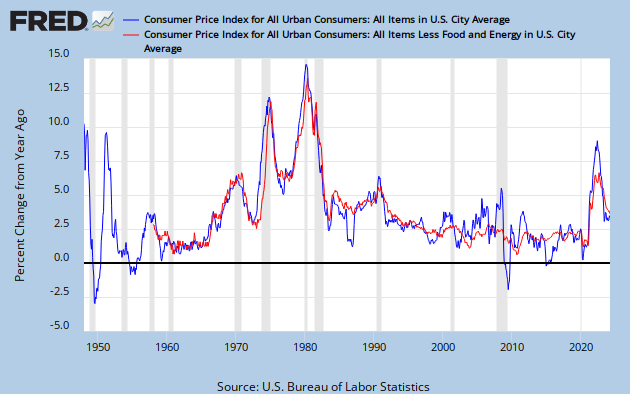
Inflation is the natural response of an economy to robust growth, as rising wages put upward pressure on other prices. A Fed devoted to controlling inflation above all else will inevitably also weigh down jobs and wages for working Americans. “Morning in America,” the economic boom of the Reagan years, was accompanied by four percent inflation on average — twice the level we’re seeing now.

The last few decades of low inflation also came alongside stagnating median wages, and a new form of “jobless” recovery that brings back economic growth, but not the job growth of previous post-war recoveries. The result has been a self-reinforcing downward spiral, as stalled wages bring more inequality and less inflation, eliminating the need for a higher federal funds rate and ultimately leaving the Fed with ever less ammunition to boost employment with each successive recession.

Certainly, the Fed’s preference for exceedingly low inflation is not the whole cause behind slow wage growth and rampant inequality. But it’s most likely a big part.


View the original article here

Sunday, June 9, 2013

White House Announces New Coordinator for Defense Policy, Countering Weapons of Mass Destruction, and Arms Control

White House Announces New Coordinator for Defense Policy, Countering Weapons of Mass Destruction, and Arms Control | The White House Skip to main content | Skip to footer site map The White House. President Barack Obama The White House Emblem Get Email UpdatesContact Us Go to homepage. The White House Blog Photos & Videos Photo Galleries Video Performances Live Streams Podcasts 2012: A Year in Photos

A unique view of 2012

2012: A Year in Photos

Briefing Room Your Weekly Address Speeches & Remarks Press Briefings Statements & Releases White House Schedule Presidential Actions Executive Orders Presidential Memoranda Proclamations Legislation Pending Legislation Signed Legislation Vetoed Legislation Nominations & Appointments Disclosures Visitor Access Records Financial Disclosures 2012 Annual Report to Congress 2011 Annual Report to Congress 2010 Annual Report to Congress on White House Staff A Commitment to Transparency

Browse White House visitor logs

President Obama greets White House visitors

Issues Civil Rights It Gets Better Defense End of Iraq War Disabilities Economy Jobs Reform and Fiscal Responsibility Strengthening the Middle Class A Plan for Refinancing Support for Business Education Energy & Environment Ethics Foreign Policy Health Care Homeland Security Immigration Immigration Reform Taxes Tax Receipt The Buffett Rule Rural Urban Policy Veterans Joining Forces Technology Seniors & Social Security Service Snapshots Creating Jobs Health Care Small Business PreK-12 Education Women Violence Prevention Now Is The Time

To do something about gun violence

Now Is The Time

Immigration Reform

Creating an Immigration System for the 21st Century

Immigration Reform

The Administration We the People

Create and Sign Petitions Now

We the People

President Barack Obama Vice President Joe Biden First Lady Michelle Obama Dr. Jill Biden The Cabinet 2010 Video Reports White House Staff Chief of Staff Denis McDonough Deputy Chief of Staff Rob Nabors Deputy Chief of Staff Alyssa Mastromonaco Counselor to the President Peter Rouse Senior Advisor Valerie Jarrett Executive Office of the President Other Advisory Boards About the White House White House On the Go

Download our mobile apps

Download our mobile appsEaster Egg Roll

Be Healthy, Be Active, Be You: April 1, 2013

White House Easter Egg Roll Inside the White House Interactive Tour West Wing Tour Video Series Décor and Art Holidays Presidents First Ladies The Oval Office The Vice President's Residence & Office Eisenhower Executive Office Building Camp David Air Force One White House Fellows President’s Commission About the Fellowship Current Class Staff Bios News and Newsletters White House Internships About Program Presidential Department Descriptions Selection Process Internship Timeline & FAQs Tours & Events 2013 Easter Egg Roll Kitchen Garden Tours Take a Virtual Tour of the White House Mobile Apps Our Government The Executive Branch The Legislative Branch The Judicial Branch The Constitution Federal Agencies & Commissions Elections & Voting State & Local Government Resources /* Maximize height of menu features. */if(typeof(jQuery)!='undefined')jQuery.each($('#topnav'),function(i,v){var o=$(v),oh=o.height(),sh=o.siblings().height();if(oh HomeBriefing Room • Statements & Releases   The White House

Office of the Press Secretary

For Immediate Release March 19, 2013 White House Announces New Coordinator for Defense Policy, Countering Weapons of Mass Destruction, and Arms Control

Today, National Security Advisor Tom Donilon announced that Special Assistant to the President and Senior Director for European Affairs Elizabeth Sherwood-Randall will be moving to a new position on the National Security Staff as the White House Coordinator for Defense Policy, Countering Weapons of Mass Destruction, and Arms Control.  She will take up her duties on April 8. 
 
National Security Advisor Donilon said, “As one of the President’s closest advisors for the past four years, Liz’s leadership and advice have been instrumental as we have successfully strengthened our alliances and partnerships across Europe, helped to revitalize NATO, and worked with Europe to advance the President’s global agenda.  Liz brings deep expertise and a track record of accomplishment in defense issues and in proliferation prevention.  The President will look to her to bring significant energy and capability to his second term as we pursue the ambitious goals he set forth in his Prague speech in 2009 and prepare our military to defend the American people and our allies against the threats we face today and in the future.”

During the Clinton Administration, Dr. Sherwood-Randall served as Deputy Assistant Secretary of Defense for Russia, Ukraine, and Eurasia, where she played a central role in the denuclearization of Ukraine, Kazakhstan, and Belarus. She has also held positions at Harvard University, Stanford University, the Council on Foreign Relations, and the Brookings Institution, and previously served as the Chief Foreign Affairs and Defense Policy Advisor to Senator Joseph R. Biden, Jr.

Extending Middle Class Tax Cuts

Blog posts on this issue March 19, 2013 11:00 AM EDTPromises Kept: Ending the Iraq War and Supporting Our Service Members, Military Families and Veterans

Ten years after the start of the Iraq War, President Obama remains committed to our service members, military families and veterans.

March 18, 2013 7:58 PM EDTAffordable Care Act at Three: Consumer Protections

The Affordable Care Act brings an end to some of the worst insurance industry practices that have kept affordable health coverage out of reach for millions of Americans, especially when they needed it most. Under the health care law, consumers can be confident that their insurance will protect them if they get sick and their families won’t be crushed by medical bills.

March 18, 2013 7:12 PM EDTPresident Obama Hosts a Celebration of Women's History Month at the White HousePresident Obama Hosts a Celebration of Women's History Month at the White House

The President vowed that he and his entire administration will do everything they can to ensure equality and opportunity for all women.

view all related blog posts ul.related-content li.views-row img {float: left; padding: 5px 10px 0 0;}ul.related-content li.view-all {padding-bottom: 3em;} Stay ConnectedFacebookTwitterFlickrGoogle+YouTubeVimeoiTunesLinkedIn   Home The White House Blog Photos & Videos Photo Galleries Video Performances Live Streams Podcasts Briefing Room Your Weekly Address Speeches & Remarks Press Briefings Statements & Releases White House Schedule Presidential Actions Legislation Nominations & Appointments Disclosures Issues Civil Rights Defense Disabilities Economy Education Energy & Environment Ethics Foreign Policy Health Care Homeland Security Immigration Taxes Rural Urban Policy Veterans Technology Seniors & Social Security Service Snapshots Women Violence Prevention The Administration President Barack Obama Vice President Joe Biden First Lady Michelle Obama Dr. Jill Biden The Cabinet White House Staff Executive Office of the President Other Advisory Boards About the White House Inside the White House Presidents First Ladies The Oval Office The Vice President's Residence & Office Eisenhower Executive Office Building Camp David Air Force One White House Fellows White House Internships Tours & Events Mobile Apps Our Government The Executive Branch The Legislative Branch The Judicial Branch The Constitution Federal Agencies & Commissions Elections & Voting State & Local Government Resources The White House Emblem En español Accessibility Copyright Information Privacy Policy Contact USA.gov Developers Apply for a Job

View the original article here

Tuesday, June 4, 2013

Carly Rae Jepsen Is Praying The Boy Scouts Abandon Their Anti-Gay Policy

Recently, “Call Me Maybe” singer Carly Rae Jepsen joined rock band Train in dropping out of the Boy Scouts of America’s National Scout Jamboree, citing the organization’s policy banning gay Scouts and Scout leaders. In an interview with MTV, she explained that the decision was not hard to make, adding that she’s praying it helps convince the BSA to make the right decision:

JEPSEN: I mean, it was sort of one of those things that I kind of have my opinions about, and everyone’s entitled to their own, but it wasn’t necessarily something that I felt comfortable backing once I learned more about it. And that being said here’s hoping they make the right decision and I’m praying that moves like this will help.

Watch it:

Jepsen’s comments come as BSA begins surveying its members about the possibility of allowing gay scouts. The questions include scenarios about gay Scouts tenting with straight Scouts, lesbians serving as den leaders when a troop’s church sponsor opposes homosexuality, and prohibiting would-be Eagle Scouts from receiving their badge just because they’re gay. Both those who want the Scouts to continue discriminating and those who don’t agree on one thing: As the “Don’t Ask, Don’t Tell” study proved, no amount of opinion will change what the right course of action is.

(HT: Pink News.)


View the original article here

Friday, May 31, 2013

How Pope Francis Can Impact Economic Policy And Help The Poor

Argentina’s Jose Mario Bergoglio, now Pope Francis, became the new head of the Catholic Church yesterday, assuming the papacy that was vacated by Pope Benedict XVI at the end of February. As a cardinal in Argentina, Bergoglio eschewed excess, living in poverty and often visiting the nation’s slums and other impoverished areas. Francis took his name from St. Francis of Assisi, the most famous Catholic advocate for the poor, and as pope, he will have the chance to continue the Church’s legacy of fighting growing rates of income inequality and defending the poor.
Though Bergoglio took strides to distance himself from liberation theology, which advocates for the reform of capitalist economics in a way that benefits the disadvantaged, while serving in Argentina, he has in the past railed against economic inequality and the lack of focus given to the poor by the world’s economic elites. He has called “extreme poverty and and unjust economic structures that create great inequities” a violation of basic human rights, and he has chastised the wealthy for not “taking into account the poor.” In 2007, he went even farther, decrying the economic inequality that exists around the world:

We live, apparently, in the most unequal part of the world, which has grown the most yet reduced misery the least. The unjust distribution of goods persists, creating a situation of social sin that cries out to Heaven and limits the possibilities of a fuller life for so many of our brothers.”

Recent popes have made similar declarations. In 2011, with streets around the world filled with protests of economic inequality and austerity that was inflicting even more pain on the poor, Benedict called for more economic equality and sweeping reforms of the global financial system in a way that would lead to the “achievement of a universal common good.” Benedict also called for greater wealth distribution to eliminate world hunger and for the greater protection of labor unions to help workers around the world.

Catholic social teaching, in fact, is rich with doctrine about the importance of defending and helping the poor. Still, the Catholic Church has been criticized for not taking sufficient action on those issues. Benedict, after all, formally censured the largest group of American nuns, who focus primarily on advocating for the poor through health care reform and poverty programs, because he said they were not focusing enough on social issues like abortion and gay marriage.

Francis has a chance to change that, whether by re-upping his anti-austerity messages in Europe, where spending cuts have driven up unemployment and decimated poverty programs, by leading opposition to increased income inequality in the United States, where cuts to poverty programs have helped exacerbate the effects of the recession, or by pushing for reforms to economic and health programs to benefit the poorest citizens of Central and South America, Africa, and Asia.


View the original article here